This is an old revision of the document!
Baron’s Green Racer (Philodryas baroni) Care Guide
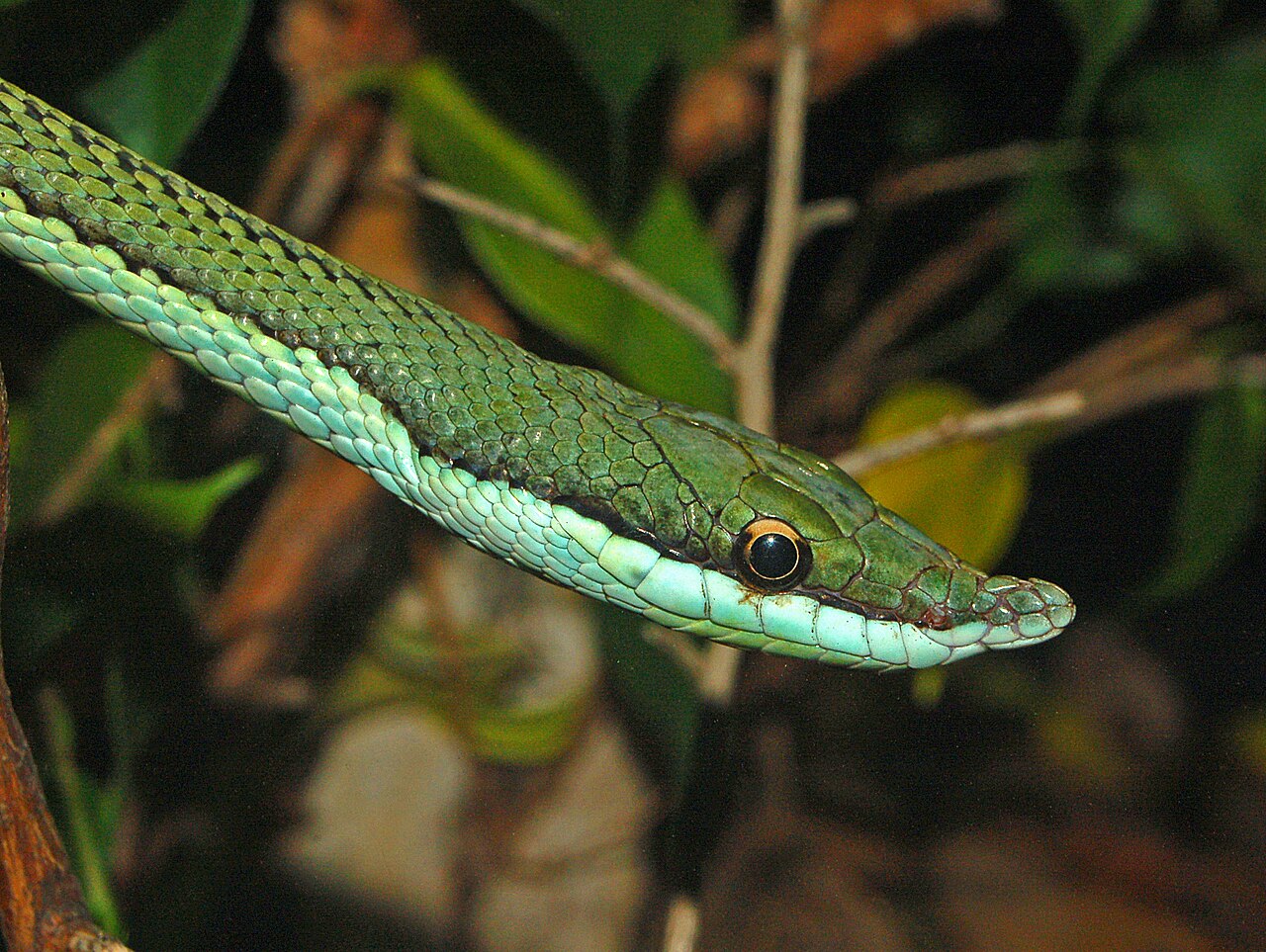 An adult Baron's Green Racer showing its slender, green body and pointed snout. This arboreal snake relies on camouflage and speed rather than brute force, and it comes with a built-in “air freshener” (musk) for those who handle it too roughly.
Summary (Quick Reference)
| Scientific Name: | Philodryas baroni |
| Common Names: | Baron's Green Racer, Argentine Long-nosed Tree Snake, Baroni Racer |
| Adult Size: | ~150–180 cm (5–6 ft) total length; exceptionally up to ~210 cm (7 ft) 1) |
| Typical Mass: | ~500–800 g (slender-bodied colubrid) |
| Lifespan: | 15–25 years in captivity with proper care 2) |
| Difficulty: | Intermediate (rear-fanged, fast, and not for frequent handling) |
| Temperament: | Generally shy and flighty, will musk and flee when startled rather than bite3)4). Ensure enclosure is secure – these snakes are fast and excellent escape artists! |
| Enclosure (for Adults): | ~120×60×60 cm (4×2×2 ft) enclosure minimum. Larger (150×75×75 cm / 5×2.5×2.5 ft or more) is strongly recommended to accommodate this active, semi-arboreal snake 5) |
| Temperatures: | Basking spot ~32 °C (90 °F). Warm side ambient ~29 °C (84 °F). Cool side ~24 °C (75 °F) 6)7)Night Temperature: ~20 °C (68 °F) ambient. Can drop to ~13 °C (55 °F) during winter brumation if breeding . Avoid sustained <10 °C (50 °F). |
| Humidity: | ~40% day, 50–70% at night. Semi-arid overall (average <50% RH) 8). Increase to ~70% during shedding or provide a humid hide. Ensure moderate ventilation to prevent stagnation. |
| Hydration: | Fresh water bowl always available (they may not soak often, but will drink). Light misting 3–6× weekly to simulate dew – they prefer licking water droplets from leaves 9) |
| Lighting: | UVB: Not strictly required to survive, but highly recommended for long-term health. Use a low-intensity UVB (e.g. 5.0 or 6% T5 bulb) providing a UVI ~2–3 at the basking site. Photoperiod: ~13 hours in summer, 11 hours in winter 10) (simulate seasonal day length). Provide bright visible light by day; total darkness at night. |
| Diet (Captive): | Carnivorous – feeds readily on rodents (mice, young rats), and can take birds (quail chicks) or amphibian/reptile prey. Hatchlings: every 5 days 11); Juveniles: every 7 days; Adults: every 7–10 days. Prey ~1–1.5× the snake’s widest body diameter or ~10% of body weight 12). Prefer pre-killed/frozen-thawed to avoid rodent bite injuries. |
| Brumation: | Optional (not strictly needed for health) but recommended for breeding. Cool for ~2–3 months at ~12–15 °C (54–59 °F)13)14). Only brumate healthy, well-fed adults (see protocol below). |
| Notes: | Rear-Fanged Venomous: Possesses mild venom (opisthoglyphous); not dangerous to humans but bites can cause localized swelling 15)16). Use care when free-handling. |
Taxonomy and Common Names

(See also Taxonomy details for classification)
Scientific Name:
Philodryas baroni (Berg, 1895). A colubrid snake in subfamily Dipsadinae (sometimes classified in family Dipsadidae). No subspecies are currently recognized.
Family:
Colubridae (Dipsadinae). This is a rear-fanged colubrid (enlarged grooved fangs at back of maxilla). Related genera include Philodryas spp. like the Green Racers of South America.
Common Names:
Commonly known as Baron’s Green Racer 17). Also called Argentine (or Argentinian) Green Racer, Argentine Long-nosed Tree Snake, or simply Baron’s Racer. (In Spanish, sometimes “culebra verde” or “serpiente voladora”, meaning “green snake” or “flying snake,” referencing its habit of leaping between branches 18).) These names allude to its coloration and pointed snout.
Description:
A slender, elongated snake reaching up to ~2 m in total length 19) – the largest species in the genus Philodryas 20). Base color is typically bright leaf-green, sometimes with black or dark green longitudinal stripes along the neck and body 21). Some individuals display striking color morphs: bluish-teal variants and a brown or olive phase (P. baroni “var. fusco-flavescens”) occur, especially in certain locales 22) 23). The belly is whitish or yellowish. The head is narrow and elongated with a distinctive pointed rostral scale forming a small “nose” – more pronounced in males 24)25). Scales are smooth, in 21–23 dorsal rows, giving a sleek appearance. Pupils are round. Males are slightly smaller and more slender than females (females may attain greater length/girth for egg-carrying) 26)27), but both sexes remain relatively gracile. Overall, the Baron’s Racer looks built for an arboreal lifestyle – its long tail, lightweight body, and green camouflage suit it for life in the trees 28).
Conservation Status and Legal Notes
Wild Status:
Assessed as Least Concern (LC) on the IUCN Red List 29) . Philodryas baroni has a broad distribution in South America and is not currently facing major population declines. However, habitat loss in the Gran Chaco region (due to agriculture and deforestation) could impact local populations in the future.
Legal Protection:
Not listed on CITES appendices (as of 2025, no special international trade restrictions). Export of wildlife from its native countries (Argentina, Bolivia, Paraguay) is generally regulated; wild collection is limited or illegal in many areas. Early herpetoculture stock came from wild imports in the 1990s 30), but today most specimens in the hobby are captive-bred. Always ensure any imports comply with local laws and obtain any required permits for venomous reptiles (some jurisdictions treat rear-fanged colubrids as “venomous” requiring a permit).
Captive Breeding:
Availability: Baron's Racers are **uncommon **in the pet trade (a “hidden gem” for experienced keepers). They were more popular in European collections in the early 2000s 31) – including a sought-after blue phase – but are now harder to find, especially in North America. Captive breeding is achievable and has produced multiple generations, but these snakes are not mass-produced like corn snakes.
Wild-Caught Concerns: **Wild specimens may carry parasites (ticks, internal worms) and often arrive stressed. They also tend to be more nervous. It is highly recommended to seek **captive-bred (CB) individuals both for ease of acclimation and to avoid depleting wild populations. Captive-bred Baroni are typically calmer and more accustomed to human presence. Supporting responsible breeders helps reduce demand for wild collection.
Geographic Distribution and Habitat
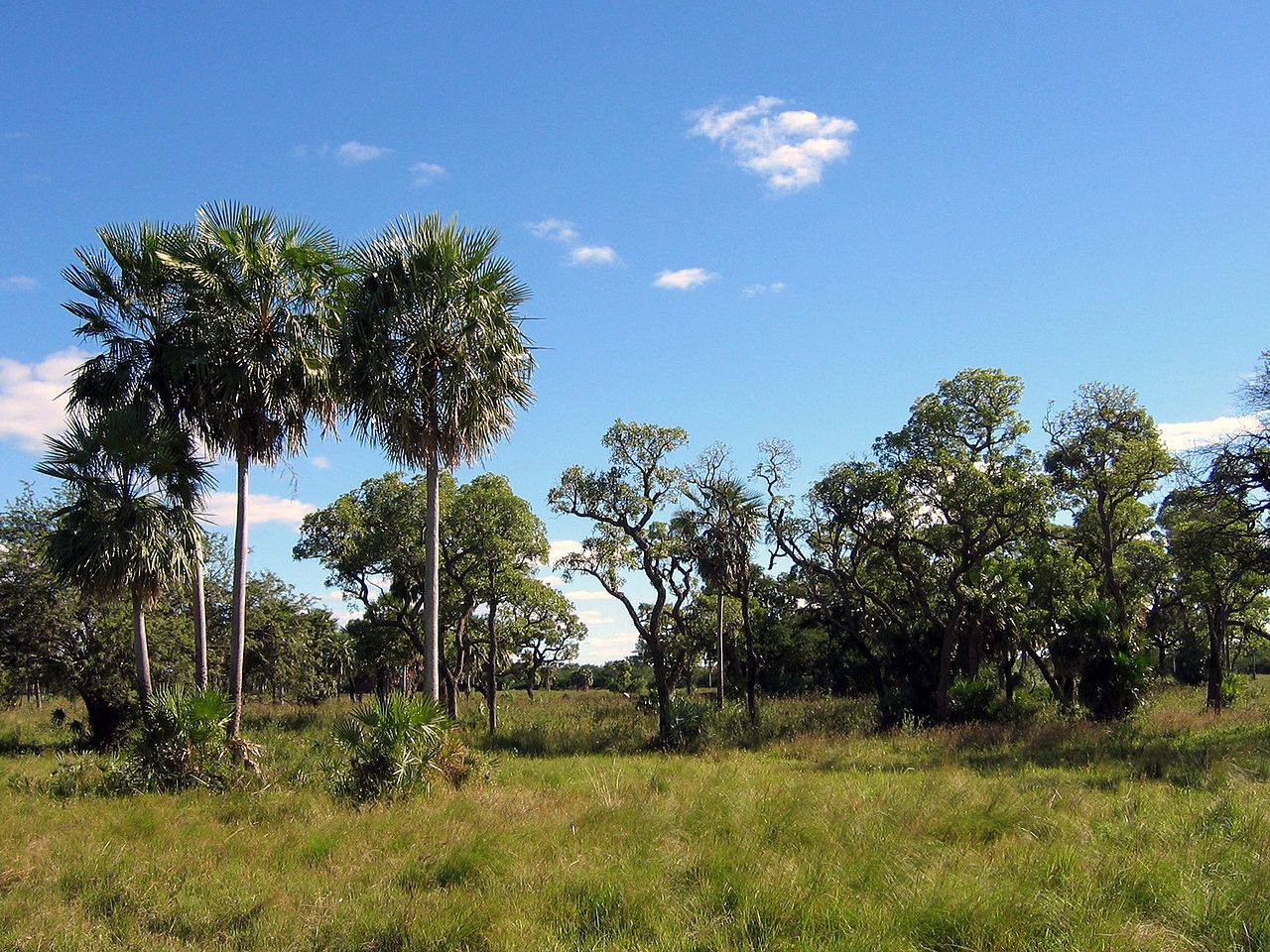 Typical habitat in the Gran Chaco region (Paraguay) – a mix of grassy savanna and dry woodland. Baron’s Green Racers thrive in these subtropical thorn scrub forests with scattered trees and open areas.
Natural Range:
Philodryas baroni is endemic to South America, found in northern Argentina, Paraguay, and **southeastern Bolivia **32) 33). Within Argentina its range includes the Chaco region and adjacent provinces (e.g. Chaco, Santiago del Estero, Salta, Tucumán, Catamarca) in the north 34). This area lies in the western Gran Chaco, extending into dry foothills of the Andes. In Paraguay and Bolivia, it inhabits similar Chacoan and dry forest environments of the lowlands.
Habitat:
Subtropical dry forests and savannas. Baron's Racer is primarily arboreal to semi-arboreal, living among the trees and bushes of thorny scrub forests, savannah woodlands, and subtropical dry forests 35)36). Its preferred habitats include the Gran Chaco – a hot, semi-arid region characterized by thorn scrub, scattered palms, and seasonal wetlands 37). It can also be found in tropical to subtropical gallery forests (forests along waterways) and transitional areas between woodland and grassland. Microhabitat usage centers on trees, shrubs, and vines **a few meters off the ground. They often hide amongst foliage, in vine tangles, or under bark and tree hollows. Baroni have been observed resting on branches and **“flying” between limbs (leaping from branch to branch) in pursuit of prey 38).
Elevation:
Most records are from low elevations (100–500 m above sea level) in flat or gently rolling terrain of the Chaco and adjacent plains. In the Andean foothills (e.g. Salta province) they may occur up to around ~1,000 m, but they primarily favor lowland habitats.
Microhabits:
Philodryas baroni is arboreal, but not strictly canopy-bound. Individuals are often encountered in small trees and shrubs a few feet off the ground 39), where they hunt and bask. They will descend to the ground to traverse open areas or to forage for ground-dwelling prey, and they can move quickly across open ground when needed 40). They do not typically burrow, but may use rodent burrows or hide under logs/leaf litter for shelter or thermal regulation, especially during cooler weather or at night. In captivity, they appreciate both climbing opportunities and some ground cover or a hide for security.